


Oscillating aquaporin phosphorylations and 14-3-3 proteins mediate circadian regulation of leaf hydraulics (Plant Cell)
Plant Science Research WeeklyPlant activities change drastically between the light and dark times of day. Many of these different activities can be observed through transcriptional studies, which show that gene expression goes up and down over the course of the day. Many of these transcriptional changes are driven by the circadian…
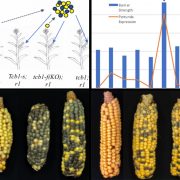
A silk-expressed pectin methylesterase confers cross-incompatibility between wild and domesticated strains of Zea mays (bioRxiv)
Plant Science Research WeeklyThe key event for speciation is reproductive isolation. In sexually reproducing plants, genetic factors act as reproductive barriers preventing the interbreeding of related strains. In this study, Lu et al. aimed to explore how the Tcb1-s (Teosinte crossing barrier 1-s) haplotype, found exclusively in…

Biofortification of field-grown cassava by engineering expression of an iron transporter and ferritin (Nature Biotech)
Plant Science Research WeeklyThere are many forms of hunger, one of which is micronutrient deficiency. Cassava is a staple food, but low in iron and zinc, in many regions where deficiencies of these micronutrients are common; therefore efforts have been made to biofortify cassava. Traditional breeding methods are of limited value…

Introducing curcumin biosynthesis in Arabidopsis enhances lignocellulosic biomass processing (Nature Plants)
Plant Science Research WeeklyLignin, polymerized from aromatic monolignols, provides strength to cell walls but its resistance to enzymatic degradation thwarts efforts to isolate cellulosic carbohydrates from cell walls for biofuels and other applications. It has been shown that lignin’s properties can be altered by the incorporation…

Global plant–symbiont organization and emergence of biogeochemical cycles resolved by evolution-based trait modelling (Nature Ecol Evol)
Plant Science Research WeeklyMost plants depend on microbial partners (symbionts) to help them take up nutrients from the soil. Lu and Hedin set out to identify how these plant-symbiont partnerships contribute to plant distributions and biogeochemical cycles, using an evolution-based modelling approach. The model takes into account…
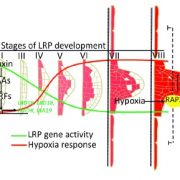
Endogenous control of root system architecture through hypoxic conditions (Mol Plant)($)
Plant Science Research WeeklyThe three-dimensional structure of plant roots, often referred to as the root system architecture (RSA), is important for soil exploration and nutrient acquisition. The regulation of the RSA is important to prevent overuse of resources and to ensure efficient function. A recent study from Shukla et al.…

Proteome-wide, structure-based prediction of protein-protein interactions (Plant Physiol)
Plant Science Research WeeklyGenomics and transcriptomics have brought huge advances in understanding of plant science, but proteomics is both more challenging and in some ways more relevant to understand what is happening inside of a cell. Proteins function largely through their interactions with other proteins, so it is important…

I see the light! Fluorescent proteins suitable for cell wall/apoplast targeting in Nicotiana benthamiana leaves (Plant Direct)
Plant Science Research WeeklyImaging proteins through fluorescent tagging is tremendously powerful but also tricky. In this very useful paper, Stottard and Rolland survey the properties of 10 fluorescent tags to determine their effectiveness in the low pH environment of the plant cell wall and apoplast. The authors also test the…

The global burden of pathogens and pests on major food crops (Nature Ecol Evol) ($)
Plant Science Research WeeklyPathogens and pests are bad, but just how bad? And how do different regions of the world compare in terms of crop losses to pathogens and pests? Savary et al. surveyed crop experts from across the globe to address these questions, focusing on five major food crops (wheat, rice, maize, potato and soybean).…