

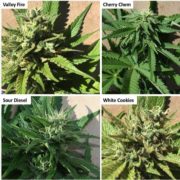
Gene networks underlying cannabinoid and terpenoid accumulation in cannabis (Plant Physiol)
Plant Science Research WeeklyRecent changes in the legal status of cannabis and cannabis-products have allowed renewed scientific interest in the genetic and metabolic basis of cannabis’ effects as well as the regulatory issues related to quality control of the products. Many varieties of Cannabis spp. have poorly documented pedigrees,…
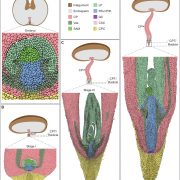
Embryo protection after germination in date palm (Plant Cell)
Plant Science Research WeeklyPlant morphogenesis is a dynamic process that can be modulated in response to environmental cues. In this work, Xiao et al. characterized germination and seedling development in date palm. After germination, the cotyledonary petiole grows, but the embryo development is paused. At early stages of development…
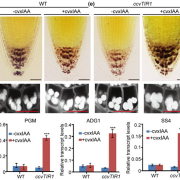
Auxin-mediated statolith production for root gravitropism (New Phytol)
Plant Science Research WeeklyPlants have evolved the ability to perceive and respond to gravity, one of the most persistent external cues. This response process, termed gravitropism, has been extensively studied for its importance in plant development and its potential to improve agronomic traits of crops. The gravitropic response…
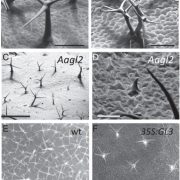
Genetic and Molecular analysis of trichome development in Arabis alpina $ (PNAS)
Plant Science Research WeeklyTrichomes (plant hairs), arise from epidermal cells of plants. The molecular mechanism involved in the development of trichomes of plants has been well studied in Arabidopsis thaliana. In this paper, Chopra et al. have identified key regulators of leaf trichome development in Arabis alpina, a species…
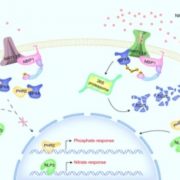
Nitrate–NRT1.1B–SPX4 cascade integrates N and P signaling networks (Nature Plants)
Plant Science Research WeeklyPlants need several mineral nutrients for their optimal growth and development. This is contingent on a proper nutrient balance particularly between the two most required essential elements, nitrogen (N) and phosphorus. Even though considerable success has been achieved in understanding the molecular…

Alternative usage of miRNA-biogenesis co-factors in plants at low temperatures (Development)
Plant Science Research WeeklyAs in animals, plants produce microRNAs that are also key developmental regulators. Unlike some animals, plants are more exposed to environmental factors that alter cellular processes. Ré et al. show here that phenotypic defects produced by loss-of-function mutations in key proteins of Arabidopsis miRNA…
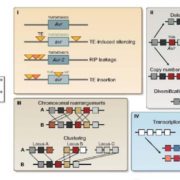
Insight: Rapid evolution in plant – microbe interactions (New Phytol)
Plant Science Research WeeklyPlants and associated microbes co-exist and co-evolve over time. The rate of evolution is higher in pathogens as compared to plants. Although the phenotypic consequences of rapid evolution in pathogens are well studied, changes at genomic level are not as well known, and are the subject of a recent review…
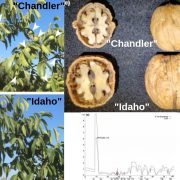
Genomic regions associated with economic traits in walnut (Plant Breeding)
Plant Science Research WeeklyThe bearing habit refers to the location of flower buds in woody plants. For walnut cultivars, lateral bearing is preferred for its yield superiority. Deciphering its genetic architecture would improve seedling and sapling selection. Here, Aradhya et al. performed a SNP-based linkage map to estimate…
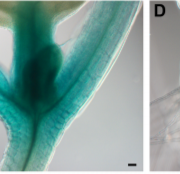
Fear Not the Unknown: OPENER as a Study in Shedding Light on Genes with Unknown Function
Research, Research Blog, The Plant Cell: In BriefGenome sequencing has become (relatively) cheap and easy, but assigning functions to the genes identified remains challenging—even in exhaustively studied species such as Arabidopsis thaliana, where functions of ~30% of genes remain unknown. Many of these genes likely have functions that are essential,…