


Recognizing Plant Cell authors: Patrice Salomé
The Plant Cell, The Plant Cell: Author Profiles
Patrice Salomé, first author of Single-Cell RNA Sequencing of Batch Chlamydomonas Cultures Reveals Heterogeneity in their Diurnal Cycle Phase
and
Co-Expression Networks in Chlamydomonas Reveal Significant Rhythmicity in Batch Cultures and Empower Gene Function Discovery
Current Position: Science…

Recognizing Plant Cell authors: Feiyang Ma
The Plant Cell, The Plant Cell: Author Profiles
Feiyang Ma, first author of Single-Cell RNA Sequencing of Batch Chlamydomonas Cultures Reveals Heterogeneity in their Diurnal Cycle Phase
Current Position: Postdoctoral Fellow, University of California, Los Angeles
Education: Ph.D. (2020), University of California, Los Angeles; B.S. (2016), Nankai…

Recognizing Plant Physiology authors: Elizabeth Chatt
Plant Physiology, Plant Physiology: Author Profiles
Elizabeth Chatt, first author of Nectar biosynthesis is conserved among floral and extrafloral nectaries
Current Position: Postdoctoral Scientist, Research & Development, Corteva Agriscience
Education: Ph.D. in Plant Biology (Iowa State University); B.S. in Biotechnology (University of…

Recognizing Plant Physiology authors: Yinglin Ji
Plant Physiology, Plant Physiology: Author Profiles
Yinglin Ji, first author of The Mechanism for Brassinosteroids Suppressing Climacteric Fruit Ripening
Current Position: Ph. D. candidate, College of Horticulture, Shenyang Agriculture University, Shenyang, China
Education: B.S. (2016)from Shenyang Agriculture University, Shenyang, China
Non-scientific…
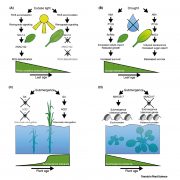
Review: Age is NOT just a number (Trends Plant Sci)
Plant Science Research WeeklyAging of plants is marked by the growth and differentiation of individual organs, as well as transitions of the whole plant through developmental phases: juvenile, vegetative adult, and reproductive phase. In their recent review, Rankenberg et al. discuss how abiotic stress responses vary in plants with…

Longer telomeres, earlier flowering: Natural variation in plant telomere length is associated with flowering time (Plant Cell)
Plant Science Research WeeklyTelomeres (from Greek words meaning "end part") are highly repetitive DNA sequences at chromosome ends that guard against degeneration during cell division. Though all eukaryotes possess telomeres, extensive interspecific variation exists for telomere lengths (300bp in yeast to 150kb in tobacco). Telomere…
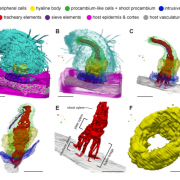
Three-dimensional reconstructions of haustoria in two parasitic plant species in the Orobanchaceae (Plant Physiol)
Plant Science Research WeeklyParasitic plants form haustoria, which are specialized multicellular structures that penetrate into their host’s vasculature and act as conduits for nutrients. The molecular and genetic contributors to haustorium development and function are well described. Here, Masumoto et al. have provided new…
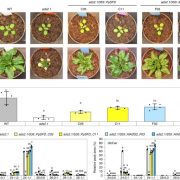
Convergence of sphingolipid desaturation across over 500 million years of plant evolution (Nature Plants)
Plant Science Research WeeklyIf you remember your biochemistry, lipids that are saturated (without double bonds) pack more tightly and therefore have a higher melting temperature than those that are unsaturated, therefore bend and pack less tightly (think of margarine versus oil). Plants can modify their membranes in a temperature-responsive…
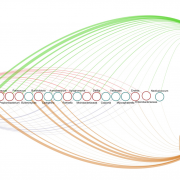
Experimental evidence of microbial inheritance in plants and transmission routes from seed to phyllosphere and root (Environ. Microbiol.)
Plant Science Research WeeklyAll plant species are associated with a diverse yet distinct assemblage of microorganisms known as the microbiome. Traditionally, the environment is considered the primary source of these microbes. However, Abdelfattah and colleagues' fascinating research shows that seeds can act as vehicles to share…