


From The Scientist: Image of the day, Pseudomonas autophagy
Blog, Research, The Plant Cell, The Plant Cell: News
An image from a paper published in Plant Cell is featured as The Scientists "Image of the Day"
Image of the Day: Pseudomonas Autophagy
Researchers identify antibacterial functions of cell death in Arabidopsis when the plant is infected with Pseudomonas.
By The Scientist Staff | March 30, 2018
A…
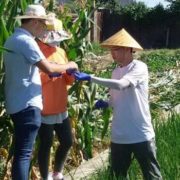
Gene boosts rice growth and yield in salty soil
Blog, Research, The Plant Cell, The Plant Cell: News
In a new study published in The Plant Cell, a team of researchers identified a gene that limits yield losses in rice plants exposed to salt stress and deciphered the underlying mechanism.
Soil salinity poses a major threat to food security, greatly reducing the yield of agricultural crops. Rising…
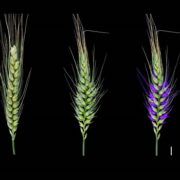
Wheat research discovery yields genetic secrets that could shape future crops
Blog, Research, The Plant Cell, The Plant Cell: NewsA new study published in The Plant Cell has isolated a gene controlling shape and size of spikelets in wheat. Materials provided by the John Innes Centre.
A new study has isolated a gene controlling shape and size of spikelets in wheat in a breakthrough which could help breeders deliver yield…

Taproot S2E4: Understanding Biological Networks and When to Break the Circuit with Ross Sozzani
Blog, The Taproot Season 2, The-Taproot0 Comments
/
In this episode, Ivan and Liz talk with Rosangela (Ross) Sozzani about her research and career path. Ross received her Ph.D. at the University of Pavia. After her post-doctoral studies at Duke University, Ross received the Armenise-Harvard Career Development Award for outstanding early-career scientists…

Developmental Timing is Everything: TZP and Phytochrome Signaling
Blog, The Plant Cell, The Plant Cell: In BriefAlthough they lack eyes, plants can differentiate between colors with a full complement of photoreceptors. Phytochromes (phys) are such photoreceptors dedicated to the visible light spectrum ranging from red light (600-700 nm) to far-red light (700-750 nm). phys are some of the most studied genes and…
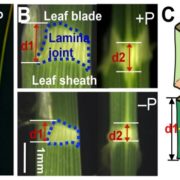
So Inclined: Phosphate Status and Leaf Angle in Rice
Blog, The Plant Cell, The Plant Cell: In BriefWhen plants have plenty of room, they can maximize the incoming light by spreading their leaves. However, in modern agricultural fields, plants that hold their leaves upright to decrease mutual shading can be grown at high density. Leaves serve as a reservoir for nitrogen that can be re-mobilized to…

Veg-A-Sketch
BlogPainting Plants with Light
I would like you to take a moment and reflect back on your memories of plant science in elementary school…
For many of us, not much will come to mind. Science curriculums often do not elaborate on plant science beyond photosynthesis. However, photosynthesis is certainly…

Taproot S2E3: Spiraling out of Silence; Speaking up for Science and Scientists with Kevin Folta
Blog, The Taproot Season 2, The-TaprootIn this episode, Ivan and Liz talk to Kevin Folta, Professor and Chairman of the Horticultural Sciences Department at the University of Florida. Kevin’s research focuses on the functional genomics of small fruit crops, photomorphogenesis, and plant transformation. In addition to his many impressive…
Interview with Benjamin Firester, winner of the Regeneron Science Talent Search, 2018
Blog, Careers, Careers - BlogFrom Facebook to disease control, starting in New York via the UK to the Volcani centre in Israel and back again, my interview with Benjy Firester, winner of the Regeneron Science Talent Search 2018, felt like a whistlestop global tour.
This bright senior student at Hunter College High School in New…