

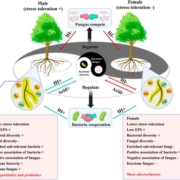
Dioecious dynamics: How male and female poplars shape microbial networks under stress
Plant Science Research WeeklyPlants actively shape the microbial community in their rhizosphere to optimize nutrient acquisition and enhance resilience against environmental stresses. Interestingly, in dioecious plants, male and female individuals play distinct ecological roles and evolve different environmental adaptability. For…
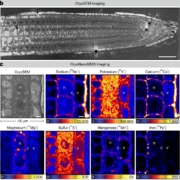
Plant Science Research Weekly: January 24, 2025
WWR Full PostReview. Unraveling plant-microbe interaction dynamics: Insights from the Tripartite Symbiosis Model
Plants naturally interact with a diverse array of microorganisms, which influence their fitness in various ways. However, understanding these plant-microbe interactions and applying the knowledge in…

How nitrogenase stays active
Plant Science Research WeeklyOne of the great dilemmas of science is the fact that nitrogen gas, though very abundant in the atmosphere, is limiting for most forms of life. Of course, this lack of availability is because N2 gas has an extremely strong triple bond holding the two nitrogen atoms together; it’s so strong that N2…

Resiliency in Long Research Projects
Blog, CareersThe advancement of scientific knowledge often relies on long-term research efforts, which enable researchers to study multiple factors and thoroughly test their hypothesis. In plant biology, long research projects serve as a cornerstone, providing crucial insights into complex processes and environmental…

An Interview with Dr. Rachel Egger: Pursuing Science in Industry with Curiosity and Courage
Blog, CommunityDr. Rachel Egger is a principal scientist at Syngenta. She obtained her Ph.D. in 2016 from Stanford University, where she investigated maize reproductive development. In 2018, she joined Syngenta and has recently been acknowledged as an Inspiring Woman in Plant Science by ASPB (https://blog.aspb.org/25-inspiring-women-in-plant-biology/).…

Overcoming a Blank Page: How to Build Healthy Writing Habits
Blog, EducationIs there anything more daunting than beginning a new writing project and staring at a blank page for days or even weeks? This common challenge often feels overwhelming, but there are strategies to overcome it. Scientific writing can be especially demanding. Crafting a journal article requires simplifying…
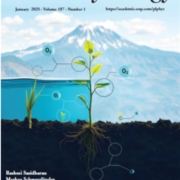
Focus Issue: Hypoxia and Plants
Plant Science Research WeeklyThe January 2025 issue of Plant Physiology has a focus on “Hypoxia and Plants”. This field has made a lot of progress recently in understanding plant responses to low oxygen, from the molecular to physiological and developmental levels. The focus issue includes reviews on topics such as divergent…
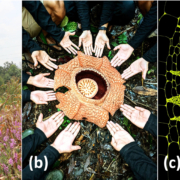
Special issue: Parasitic plants
Plant Science Research Weekly
Special issue: Parasitic plants
Runo, Wicke, and Thorogood have edited a special issue of Plants, People, Planet on the topic of parasitic plants. (Note - the Special Issue will be launched on February 19, but the articles are already online in Early View). It’s nice to see a collection…
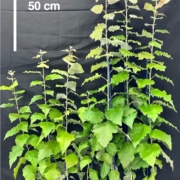
BOOSTER: Unlocking photosynthetic efficiency for enhanced plant productivity
Plant Science Research WeeklyPhotosynthesis is a fundamental biological process for carbon fixation and capturing light energy to drive plant growth. However, excessive sunlight can cause photodamage, which is detrimental to plant health. To protect the photosynthetic machinery from over-excitation and subsequent damage, plant cells…