

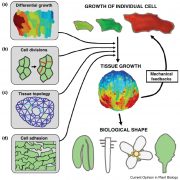
Review - Cellular basis of growth in plants: geometry matters (COPB - $)
Plant Science Research WeeklyPlants exhibit various forms which are determined by the individual cells. The diversity of cell shapes within a single organism is astounding and results from the interactions between the pressure generated by the cell and surrounding tissue as well as heterogeneities in the cell wall composition. As…
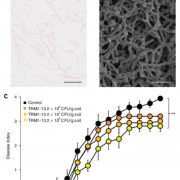
Rhizosphere microbiota structure alters to enable wilt resistance in tomato (Nature Biotech. - $)
Plant Science Research WeeklyPlants are frequently attacked by pathogens, but the pathogen-resistance is often attributed to the host. While interactions between the plant and its microbiota are recognized for their role in plant growth, their role in pathogen resistance is unknown. Kwak et al. studied the effect of soil-borne pathogen Ralstonia…
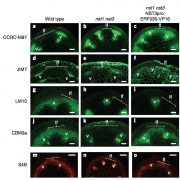
Complete substitution of a secondary cell wall with primary cell wall in Arabidopsis (Nature Plants - $)
Plant Science Research WeeklyPlant cell walls are important for terrestrial lifestyle, providing support and directing the plant growth. The primary and secondary cell walls differ in their chemical composition and flexibility. Secondary cell walls are less perceptive to industrial degradation processes and therefore pose problems…
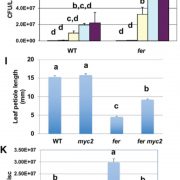
FERONIA receptor kinase contributes to plant immunity by suppressing jasmonic acid signaling in Arabidopsis thaliana (Curr. Biol. - $)
Plant Science Research WeeklyReceptor-like kinase FERONIA plays important role in the regulation of plant growth as well as interactions with the environment. In order to understand how FER affects plant growth Guo et al. examined global transcriptome changes in fer mutant. The authors observed that genes up-regulated by stress…
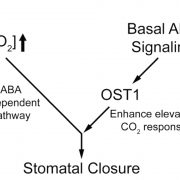
Abscisic acid-independent stomatal CO2 signal transduction pathway and convergence of CO2 and ABA signaling downstream of OST1 kinase (PNAS - $)
Plant Science Research WeeklyThe global increase in CO2 concentrations results in the reduced opening of the stomata. Although reduction in the stomatal opening in response to drought relies on abscisic acid (ABA), less is known about the mechanism controlling stomatal aperture in response to elevated CO2. Hsu et al. examined stomatal…
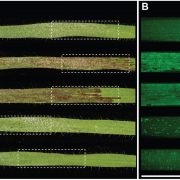
The genetic architecture of colonization resistance in Brachypodium distachyon to non-adapted stripe rust (Puccinia striiformis) isolates (PLOS Gen.)
Plant Science Research WeeklyThe host range of a pathogen depends on its ability to overcome various plant defense barriers and successfully complete its life cycle. Although host “jumps” are considered rare, the pathogens are able to infect plants other than their usual host with varying degree of success. Yellow stripe rust…

The number of meiotic double-strand breaks influences crossover distribution in Arabidopsis (The Plant Cell)
Plant Science Research WeeklyThe new genetic variation is generated by recombination of the chromosome during meiotic cell divisions. The programmed double-strand breaks are initiated by DNA Topoisomerase VI-a Subunit (SPO11). As the repair of the double-strand breaks is tightly controlled, the number of breaks usually exceeds the…
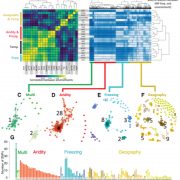
Modularity of genes involved in local adaptation to climate despite physical linkage (Genome Biol.)
Plant Science Research WeeklyStudying local adaptation is a tricky as the environmental parameters that we measure might affect the organism’s fitness. When local adaptation is driven by complex and non-covarying stresses, it is predicted that loci with similar pleiotropic effect are favored. Lotterhos et al. developed a framework…
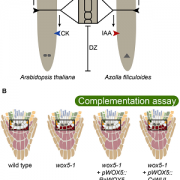
Review - Getting to the Roots: A Developmental Genetic View of Root Anatomy and Function From Arabidopsis to Lycophytes (Frontiers in Plant Sci)
Blog, Plant Science Research WeeklyPlant roots are essential organs for water and nutrient uptake, and aboveground biomass support. While these organs are important for many plant functions, the evolutionary history of the root is still unclear. The fossil record suggests that roots evolved in both the lycophyte (clubmosses and their…