

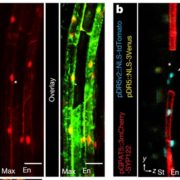
Diffusible repression of cytokinin signaling produces endodermal symmetry and passage cells (Nature)
Plant Science Research WeeklyPassage cells are a subset of interspersed root endodermal cells that are unsuberized, which is thought to aid in transport because suberin inhibits transcellular transport. In Arabidopsis, suberization follows a stereotypic pattern which responds to many stress conditions, partly mediated by abscisic…

Mechanistic basis for the activation of membrane receptor kinases by SERK-family coreceptors (PNAS)
Plant Science Research WeeklyLRR-RKs (Leucine-Rich Repeat Receptor Kinases) are membrane-spanning receptor molecules that recognize a diverse array of signaling ligands. SERKs (SOMATIC EMBRYOGENESIS RECEPTOR KINASEs) are co-receptors that are required for signal processing. Like LRR-RKs, SERKs span the membrane, with an intracellular…

Tip-localized Ca2+-permeable channels control pollen tube growth via kinase-dependent R- and S-type anion channel regulation (New Phytol.)
Plant Science Research WeeklyCalcium plays a major role in regulating pollen tube (PT) growth. Calcium levels are oscillatory in nature at the PT tip, along with anion efflux. Calcium has been shown to regulate anion channels in guard cells through calcium protein kinase (CPK) activation. Gutermuth et al. provide evidence for…

Metal sensing by the IRT1 transporter-receptor (Mol. Cell)
Plant Science Research WeeklyPlants need some but not too much iron, so the regulation of iron transporters is quite tight. IRT1 is a broad-spectrum metal transporter that is crucial for iron uptake (mutants can only be rescued by massive amounts of iron). IRT1 synthesis is transcriptionally upregulated by iron limitation, and although…
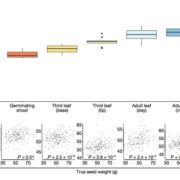
Dysregulation of expression correlates with rare-allele burden and fitness loss in maize ($) (Nature)
Plant Science Research WeeklyDeleterious mutations often underlie disease susceptibility and reduced fitness, but are very difficult to study due to their low frequency in the population. Maize is a great system for studying deleterious mutations because of high genetic diversity and the rapid decay in genetic linkage, enabling…
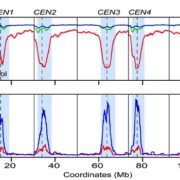
Initiation of meiotic recombination is regulated by epigenetic marks and chromatin structure (Genome Res.)
BlogMeiotic recombination is an important source of genetic diversity by allowing the reshuffling of parental alleles during meiosis. It requires the generation of DNA double-strand breaks (DSBs) initiated by the activity of the SPO11 protein complex. In plants, the impact of chromatin structure and DNA…

Review: The molecular control of tendril development in angiosperms (New Phytol.)
Plant Science Research WeeklyThere are obvious advantages to being a climbing plant; for example, climbing is a low-cost way to avoid being shaded by your neighbors. Tendrils, which evolved independently several times, are one climbing strategy (others include twining stems and sticky adventitious roots). Sousa-Baena et al. review…
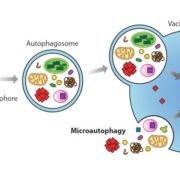
Review. Autophagy: The master of bulk and selective recycling (Annu Rev Plant Biol)
Plant Science Research WeeklyA functioning cell depends upon the appropriate production of proteins and macromolecules. The other end of the process, degradation and removal, is just as critical and just as selective. Marshall and Vierstra review autophagy (“self-eating”) in plants, connecting early work in yeast to genetic,…
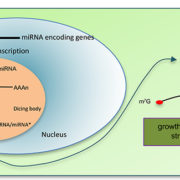
MAC3 Proteins Regulate MicroRNA Biogenesis
Research, The Plant Cell, The Plant Cell: In a NutshellLi et al. uncovered the roles of MAC3 in miRNA biogenesis in Arabidopsis. Plant Cell (2018).
By Shengjun Li and Bin Yu
Background: microRNAs (miRNAs) are tiny RNA molecules that regulate gene expression. Plants use miRNAs to control development and physiology. Consequently, understanding of the…