

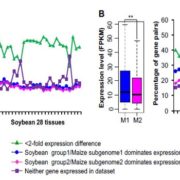
Patterns and consequences of subgenome differentiation provide insights into the nature of paleopolyploidy in plants
Blog, Plant Science Research Weekly, Research, Research BlogMany plants are polyploid, meaning that instead of the normal, diploid “2n” complement of chromosomes (one from each parent), they have more than 2n. Following whole-genome duplication, redundancy can allow the duplicated regions to diverge or become silenced. In some cases, silencing occurs preferentially…
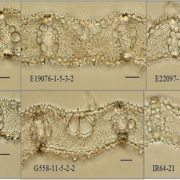
Increasing leaf vein density in rice results in an enhanced rate of photosynthesis
Blog, Plant Science Research Weekly, Research, Research BlogIncreased leaf vein density is considered to be a key early step in the evolution of C4 photosynthesis. Feldman et al. analyzed five mutants with high vein densities in the C3 crop rice to determine if photosynthetic assimilation was improved. The mutants all had higher photosynthetic rates under…
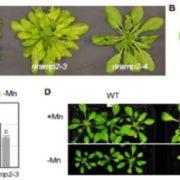
Intracellular distribution of manganese by NRAMP2 critical for photosynthesis and redox homeostasis
Blog, Plant Science Research Weekly, Research, Research BlogManganese is a micronutrient essential for the function of several proteins including manganese superoxide dismutase (localized in the peroxisome and mitochondria) and the photosystem II reaction center (localized in the chloroplast). Mn is transported via NRAMP (Natural Resistance-Associated Macrophage…
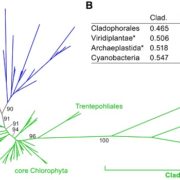
The plastid genome in Cladophorales green algae is encoded by hairpin chromosomes ($)
Blog, Plant Science Research Weekly, Research, Research BlogPlastids, the cellular sites for light reaction of photosynthesis, have a reduced genome which is circular and double stranded, ranging in the size from about 100 to 200 Kb. Some exceptions to this circular nature of plastid genomes are found in some groups of phytoplanktons, namely dinoflagellates,…
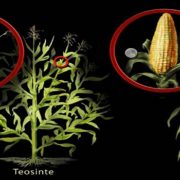
Review. Artificial evolution: Creating genetic diversity in the lab ($)
Blog, Plant Science Research Weekly, Research, Research BlogHumans have been domesticating plants for 10,000 years, having an impact on the gene pools of multiple species chiefly through selective breeding approaches. Although plant domestication ensured food availability to early civilizations, plants were, and still are, mainly selected based on their morphology…

Review: Emerging roles of cortical microtubule–membrane interactions ($)
Blog, Plant Science Research Weekly, Research, Research BlogThe plant cytoskeleton forms a dynamic and complex architecture in all plant cells and comes with a myriad number of functions, from allowing intracellular transport to regulating gene expression. In this review, Yoshihisa Oda focuses on the purposes of cortical microtubule (cMT) arrays, which are anchored…

Review: Acid growth, an ongoing trip
Blog, Plant Science Research Weekly, Research, Research Blog
Plant growth is determined not only by cell division, but also by loosening of the cell wall. Arsuffi and Braybrook review our understanding of the mechanisms of cell wall loosening. Already in the 1970s scientists started to observe that low pH leads to increased growth, using destructive experiments.…

Letter: New database for metal and metalloid accumulating plants
Blog, Plant Science Research Weekly, Research, Research BlogPlants that can accumulate metals or metalloids in their living tissues to extremely high levels (hyperaccumulators) can be used to model metal uptake and biotic interactions and used for phytoremediation, among other uses. While the uses for hyperaccumulators are vast, until now a database with global…

Commentary: The next generation of training for Arabidopsis researchers: Bioinformatics and quantitative biology
Blog, Plant Science Research Weekly, Research, Research BlogFriesner and 38 other authors have written a Commentary outlining the need to radically redesign training for plant scientists to work with the massive production of biological data. They recommend a comprehensive revision of how we train undergraduate through post-docs, as well as opportunities for…