


Rice viruses hijack plant volatiles to shield insect vectors from natural enemies
Plant Science Research WeeklyVector-borne viruses such as rice stripe virus (RSV) are transmitted from plant to plant by insects such as planthoppers. Plants under attack often emit volatile compounds such as methyl salicylate (MeSA) that attract parasitoid wasps that destroy the eggs of the virus-transmitting insects. In a recent…
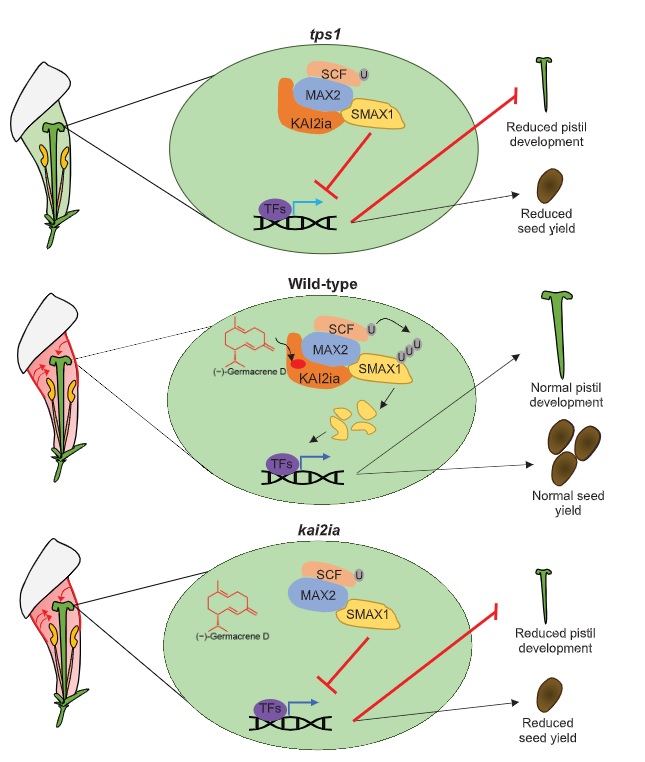
Volatile communication in plants relies on a KAI2-mediated signaling pathway
Plant Science Research WeeklyWhile it is recognized that plant communication, both within and between plants, can be achieved through emission and perception of volatile organic compounds (VOCs), it is unclear exactly how these signals are perceived and transmitted. Stirling et al. tease apart the components of within-plant VOC…
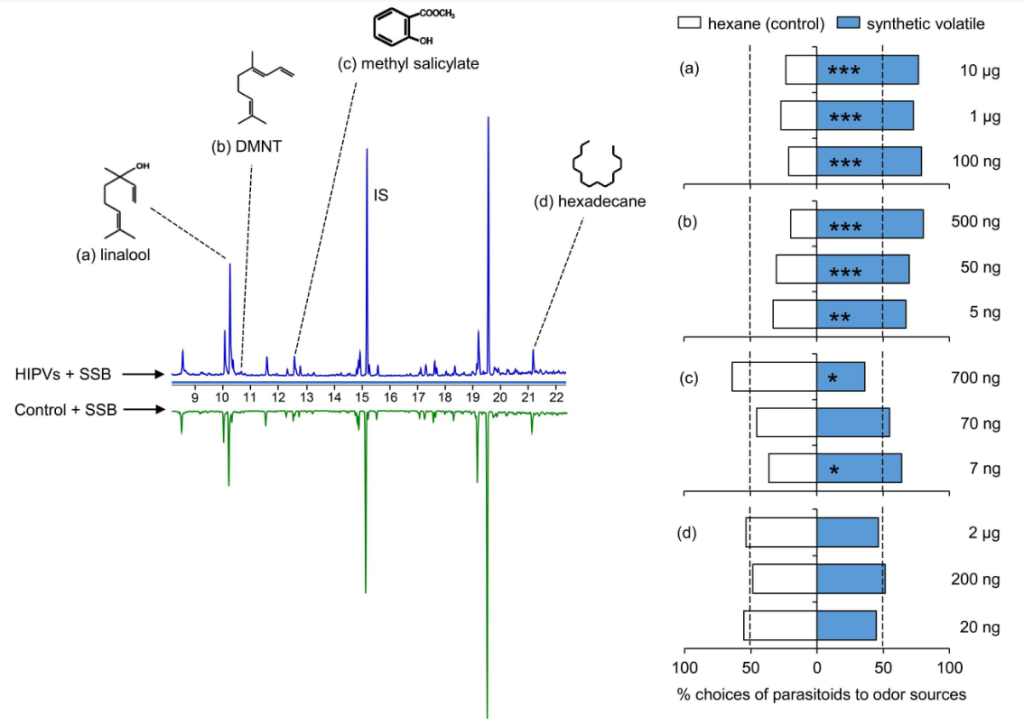
Stemborer-induced rice plant volatiles boost direct and indirect resistance in neighboring plants (New Phytol)
Plant Science Research WeeklyHerbivore attack can trigger release of volatile organic compounds (VOCs) in numerous plant species. These airborne compounds from an infected plant act as messengers in plant-plant interactions causing adaptation to the stress in adjacent plants. Globally, rice is a staple food for millions of people,…