

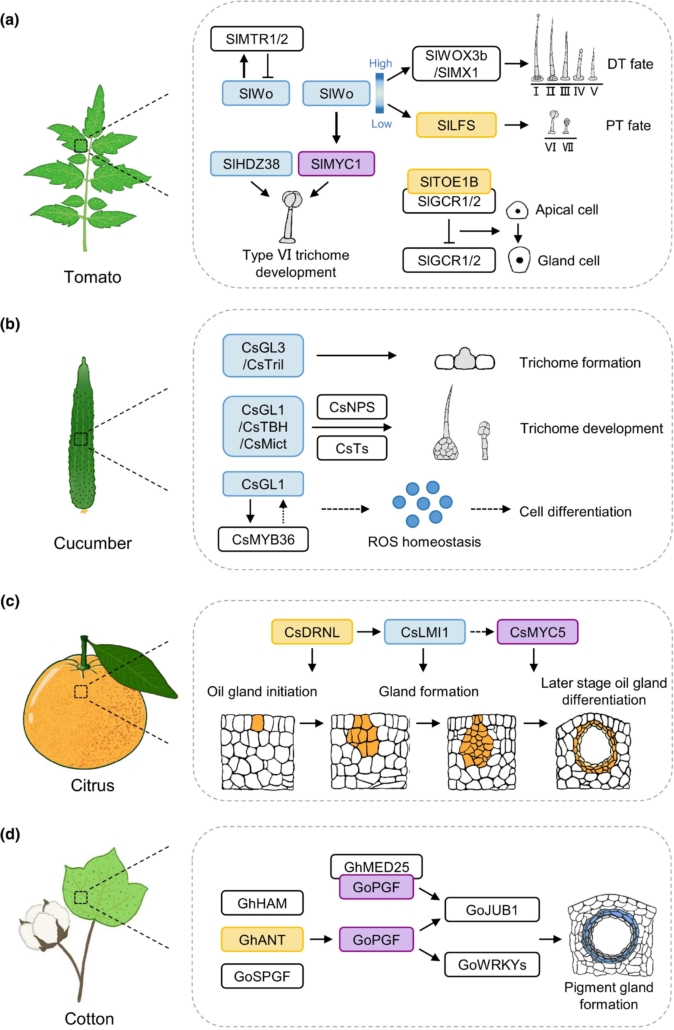
Review: Epidermis-derived secretory structures
Plant Science Research WeeklyI’d never thought about the fact that there are two distinct types of epidermal-derived secretory structures, both mainly involved in stress responses and defense. Glandular trichomes (GTs) are well known structures that protrude outwards, but they are joined by subcutaneous secretory cavities (SCs)…
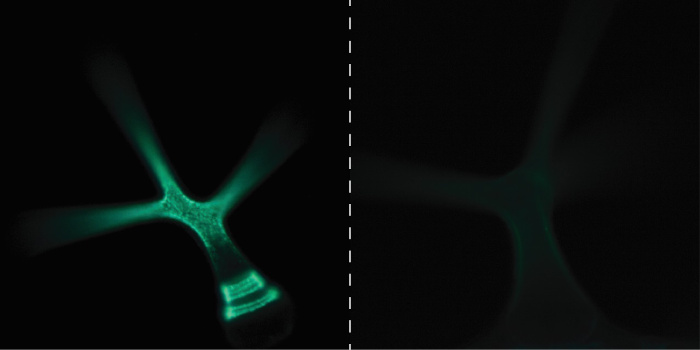
A hair-raising story: EXO70 and MLO proteins jointly mediate secretion
The Plant Cell: In a NutshellHuebbers, Caldarescu, et al. examine how the EXO70 and MLO proteins cooperate in targeted deposition of cell wall components in trichomes.
By Jan W. Huebbers1 and George A. Caldarescu2
1 Unit of Plant Molecular Cell Biology, Institute for Biology I, RWTH Aachen University, Worringerweg 1, 52056…

Herbivore-deterring trichomes persist with the help of Woolly and Get02
Plant Science Research WeeklyType-IV glandular trichomes, which produce acylsugars, are effective deterrents against herbivory in Solanum, but they only persist in the juvenile stage of the cultivated tomato (S. lycopersicum). Therefore, these trichomes serve as a marker for the transition from juvenile to adult phases in developmental…
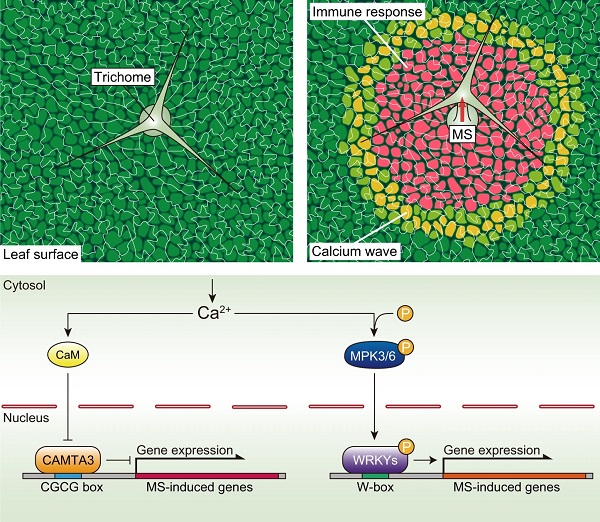
Always prepared: priming of the defense response by trichomes (Nature Comms)
Plant Science Research WeeklyRain contributes to plant disease. Rain can contain high concentrations of pathogens (like Pseudomonas, Xanthomonas, Alternaria, Fusarium sp., etc.), and high humidity associated with rain antagonizes stomatal closure, leaving open entry points for some pathogens. Matsumura and colleagues have demonstrated…