

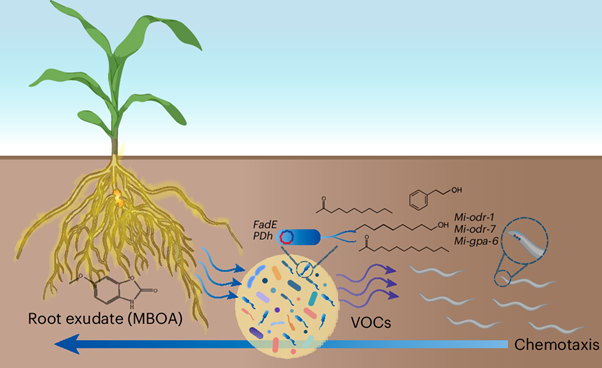
Secondary metabolites from plants can affect nematode behavior via microbial volatile signaling cues
Plant Science Research WeeklyPlant parasitic nematodes such as root-knot nematodes (RKNs) are thought to use chemical cues from the plant to locate their favorable hosts. These chemical cues can code for host specificity and can drive the attraction or repulsion of nematodes. Recently, Wu et al. investigated the role of benzoxazinoids…
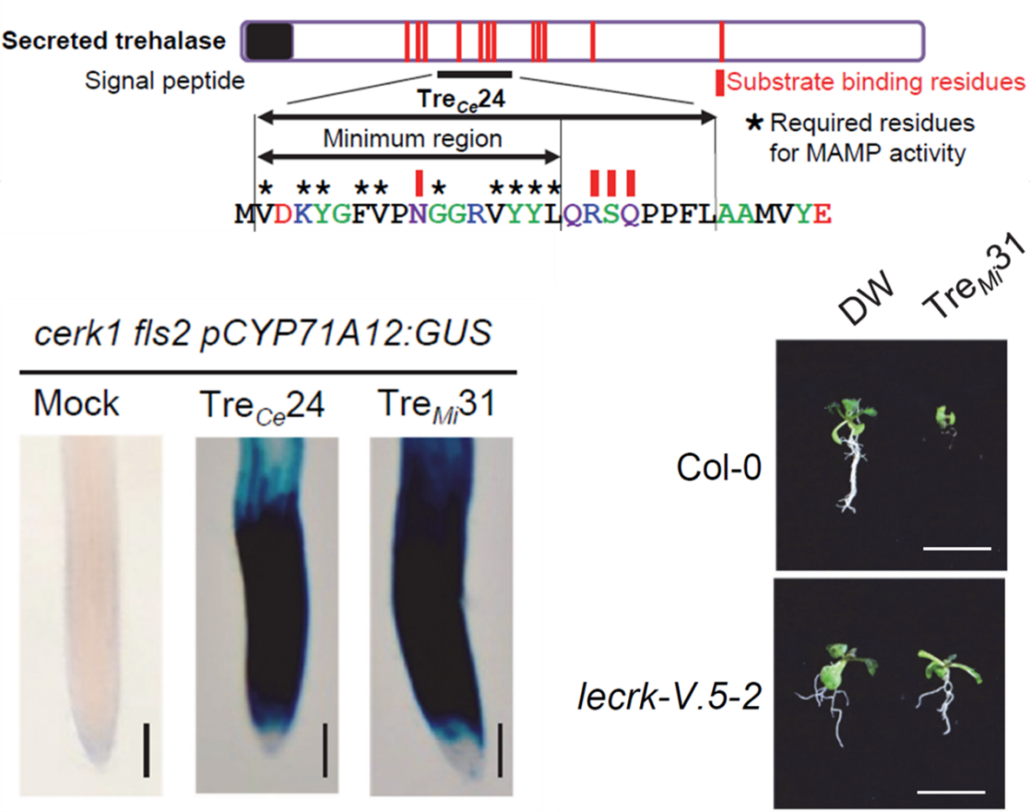
LecRK-V and trehalose-associated immunity: a conserved defense mechanism across kingdoms
Plant Science Research WeeklyMembrane-localized receptor-like kinases (RLKs) are essential for perceiving diverse signaling molecules, including proteins, polysaccharides, hormones, reactive oxygen species, ions, and damage-associated molecular patterns. Among the well-characterized RLKs, FLS2, EFR, and CERK1 are known to recognize…
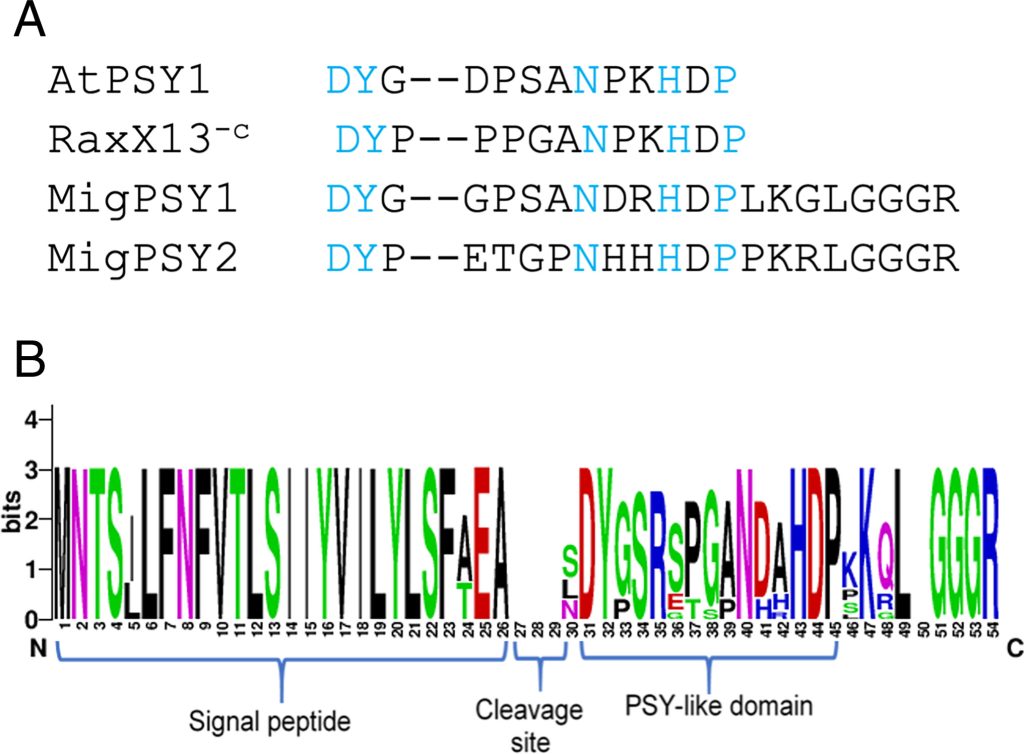
Root-knot nematodes produce functional mimics of tyrosine-sulfated plant peptides
Plant Science Research WeeklyI love reading about pathogens hijacking host systems; I’m always thrilled to see how “life finds a way”. Here’s another. Plants use a variety of peptides as hormones, many of which have covalent modifications of one sort or another. One class are the tyrosine-sulfated peptides, the PLANT PEPTIDE…