

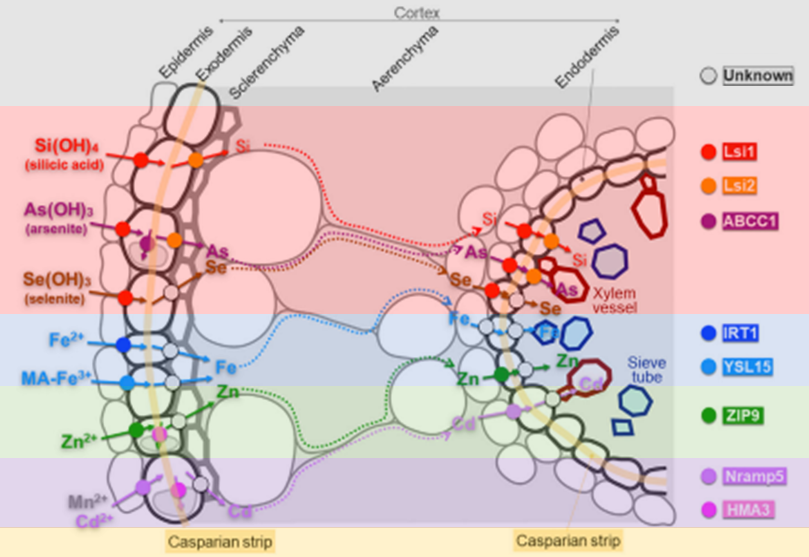
Review. Plant nutrition for human nutrition: Hints from rice research and future perspectives
Plant Science Research WeeklyAmong all the mineral elements transported from the soil to the plant, cadmium (Cd) and arsenic (As)- are toxic for all organisms whereas 13 micronutrients, including iron (Fe) and zinc (Zn), are beneficial for both human and plant nutrition. Ideally, food crops should accumulate fewer soil contaminants…
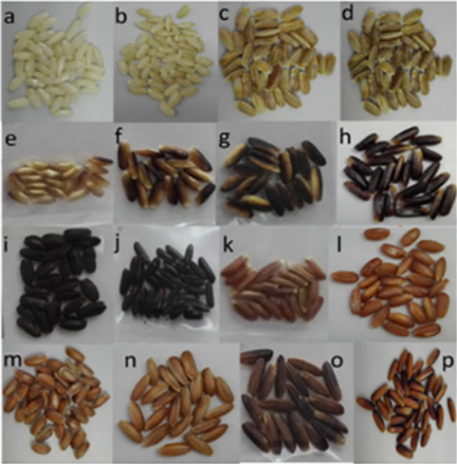
Review: The genetic basis and nutritional benefits of pigmented rice (Frontiers Genetics)
Plant Science Research WeeklyPigmented rice varieties are those in which a pigment is deposited in the bran, the outer layer of the grain. The pigment can be from brown to red (proanthocyanidins) or from purple to black (anthocyanins). In the course of domestication, humans have selected against the genetic factors responsible for…

Synthetic biogenesis of chromoplasts from leaf chloroplasts (bioRxiv)
Plant Science Research WeeklyChromoplasts are a type of plastid, usually found in fruits and flowers, that can accumulate large amounts of carotenoids including beta-carotene (pro-vitamin A). It has been proposed that increasing chromoplast formation could be a way to enhance human consumption of vitamin A. In a new report, Llorente…

Compositional analysis of genetically engineered GR2E “Golden Rice” (J. Agric. Food Chem.)
Plant Science Research WeeklyIn Southeast Asian countries, rice accounts for two-thirds of the caloric intake for many people. This narrow dietary base is often correlated with vitamin A deficiency, which can cause blindness, anemia and weakened immunity. In an effort to enhance vitamin A consumption, rice has been engineered to…

Review: The challenges of delivering genetically modified crops with nutritional enhancement traits (Nature Plants) ($)
Plant Science Research WeeklyDespite the widespread success of genetically modified (GM) crops resistant to herbicides and insect herbivory, GM food crops with nutritional enhancement traits remain on the fringes of commercial agriculture. In this review, Napier et al. examine the current state of GM food crops and the obstacles…