

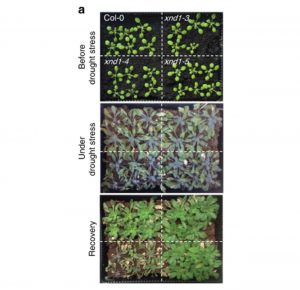
The Arabidopsis negative regulator of root hydraulics XND1 is involved in abiotic and biotic stress responses (Nature Comm.)
Plant Science Research WeeklyProper uptake and management of water is essential for plant growth and adaptation to stress. However, there are gaps in the understanding of the genetics of root hydraulics, including the regulatory components. Tang et al. used a genome-wide associate analysis approach to identify XYLEM NAC DOMAIN 1 (XND1),…
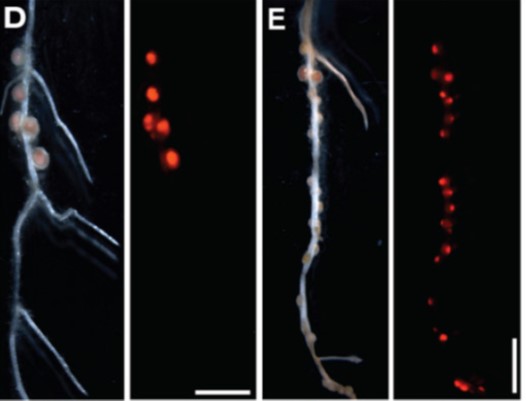
A shoot-derived miRNA ensures susceptibility to beneficial rhizobacteria in legumes (Science)
Plant Science Research WeeklyNitrogen-fixing rhizobacteria and leguminous plants engage in a tightly controlled root symbiosis resulting from bacteria-to-plant as well as (plant) shoot-to-root communication. This interplay controls the initiation and maintenance of root nodule development while preventing the over-production of…
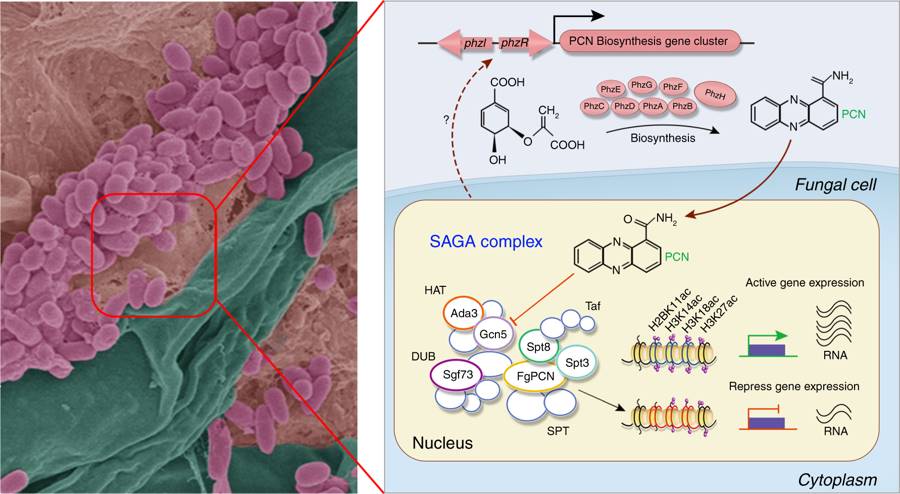
Wheat microbiome bacteria reduce virulence of pathogenic fungus by altering fungal histone acetylation (Nature Comms)
Plant Science Research WeeklySometimes the plant is a relatively passive host upon which other organisms engage in dynamic interactions. Chen et al. showed that a wheat head-associated bacterium, Pseudomonas piscium, produces antifungal compounds that inhibit the growth of a plant pathogenic fungus, Fusarium graminearum. The authors…
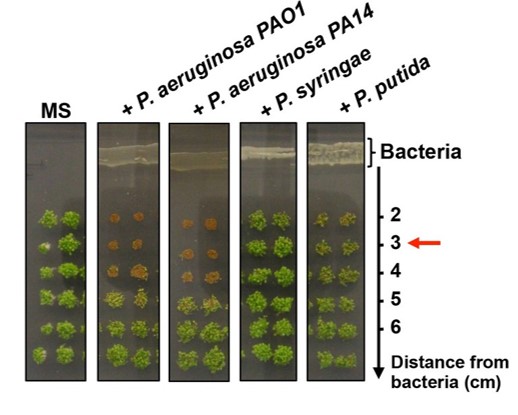
Arabidopsis seeds delay germination in the presence of pathogens (eLIFE)
Plant Science Research WeeklyThe rhizosphere represents a complex and dynamic environment that poses many challenges for seed germination and seedling establishment. While a number of well-characterized abiotic factors and hormone signaling pathways are known to contribute to the initiation of seed germination, our current understanding…
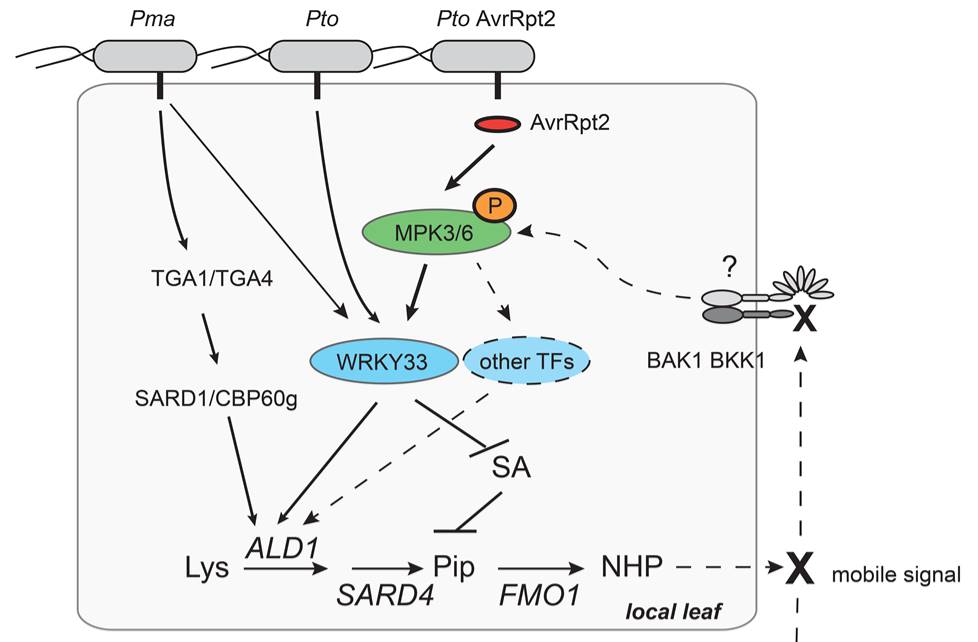
Plant Systemic Immunity Comes Full Circle: A Positive Regulatory Loop for Defense Amplification
The Plant Cell, The Plant Cell: In BriefThe plant immune system is effective in conferring resistance to various invading pathogens and pests. Membrane-localized pattern recognition receptors (PRRs) and intracellular nucleotide-binding domain, leucine-rich repeat proteins (NLRs) recognize pathogen-associated molecular patterns and pathogen…
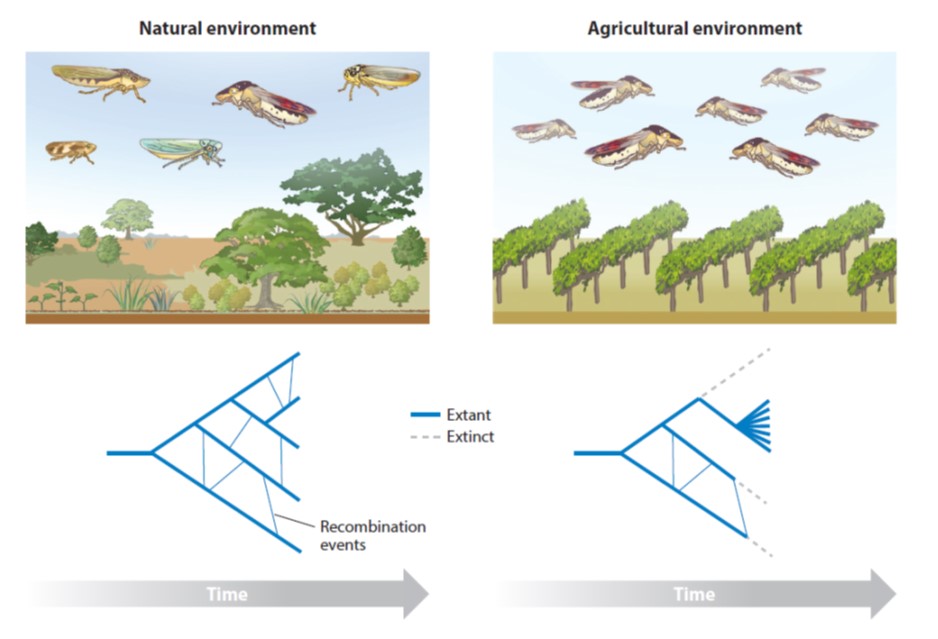
Review. Xylella fastidiosa: Insights into an emerging plant pathogen ($) (Annu. Rev. Plant Phytopathol.)
Plant Science Research WeeklyThe plant pathogenic bacterium Xylella fastidiosa occurs widely and often asymptomatically, yet it is associated with a few seriously bad disease outbreaks, the most recent affecting olive trees in southern Italy and adjoining regions. It also is the causal agent of Pierce’s Disease of grapevine, citrus…

A single transcription factor promotes both yield and immunity in rice ($) (Science)
Plant Science Research WeeklyPlants regularly prioritize either growth or defense, leading to reduced growth rate when the plant is under attack. Wang et al. have identified a simple switch in rice that demonstrates this principle beautifully. The Ideal Plant Architecture 1 (IPA1) transcription factor is involved in controlling…
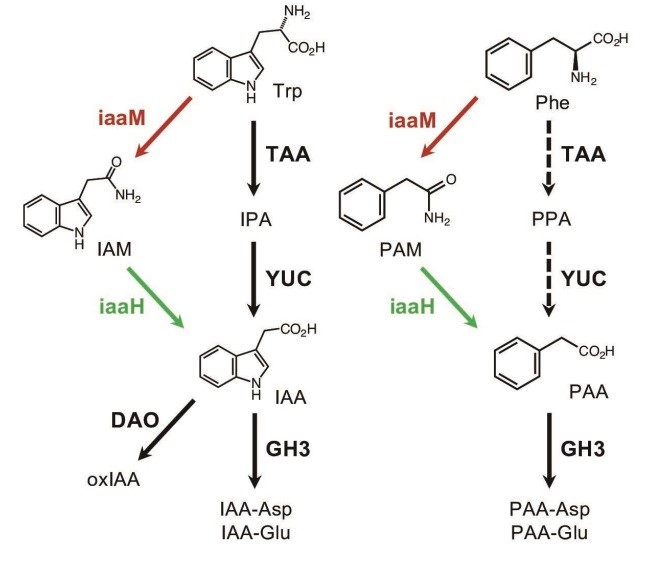
Agrobacterium tumefaciens enhances biosynthesis of two distinct auxins in crown galls ($) (Plant Cell Physiol.)
Plant Science Research WeeklyKiyoshi et al. investigated auxin biosynthesis during the formation of crown galls by Agrobacterium tumefaciens. Agrobacterium introduces into the plant T-DNA containing two auxin biosynthesis genes iaaM (TRYPTOPHAN-2-MONOOXYGENASE) and iaaH (INDOLE-3-ACETAMIDE HYDROLASE). The authors used LC-MS/MS to…
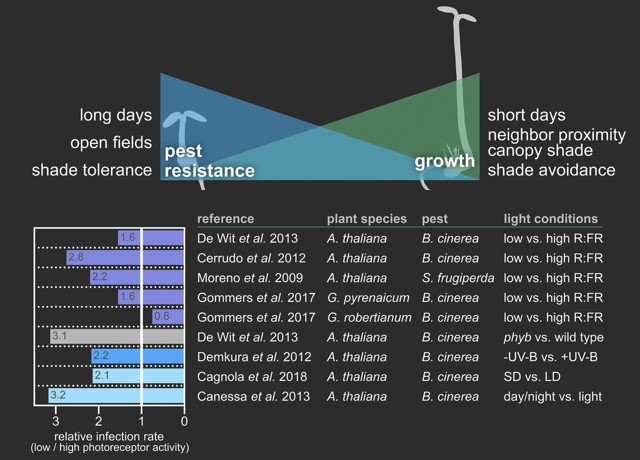
The Healing Power of Light
Blog, Plant Physiology, Plant Physiology: News and ViewsLight is life, especially for plants. It fuels photosynthesis and, when perceived by photoreceptors, directs important developmental programs, including photomorphogenesis and shade avoidance. Red and blue light wavelengths activate phytochrome (phy) and cryptochrome (cry) photoreceptors, respectively,…