

Review: New routes for plant iron mining
Plant Science Research Weekly, Research0 Comments
/
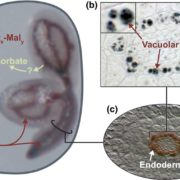
Iron (Fe) is a frequently limiting nutrient for plant growth. Iron uptake requires that plants manipulate the extracellular environment through secretion of protons, chelators and other molecules. Curie and Mari review new studies on the importance of coumarin (phenolic compound) secretion in iron uptake,…

Review: Chloride on the move ($)
Plant Science Research Weekly, ResearchSaline soils are an ever growing problem, whether due to seawater incursions, for example in Bangladesh, or due to the rising water table in Australia. Salinity is harmful in three ways: non-specific osmotic effects, excess Na+, and excess Cl–. Of these, chloride has received the least attention. Li…

Review: Modeling stomatal conductance
Plant Science Research Weekly, ResearchThe transpiration rate of water though stomata, known as stomatal conductance or gs is one of the most critical and regulated of plant physiological processes. Buckley reviews recent progress on the development of comprehensive models of stomatal conductance, including the effect of soil moisture and…
Two Reviews: CRISPR/Cas for genome engineering in plants, and genome editing in cereal crops ($)
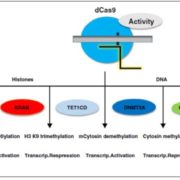
Plant Science Research Weekly, ResearchThe gene-editing technology CRISPR/Cas, which introduces double-strand breaks that are repaired by non-homologous end joining (NHEJ), is best known for the promise it holds in modifying an organism’s DNA without the introduction of exogenous genes. However, as Puchta describes (Curr. Opin. Plant Biol.…
Low Phytate Rice Grains
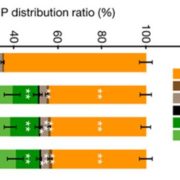
Plant Science Research Weekly, ResearchPhosphorus (P) is an important macronutrient for crop productivity. In cereal crops like rice, about 60-85% of total plant P is allocated to grains and therefore removed from fields at harvest. Furthermore, the major form of P in the grains is phytate (C6H18O24P6), which cannot be digested by humans…
Review: DNA Checkpoints and Aluminum Tolerance ($)
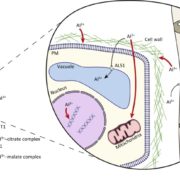
Plant Science Research Weekly, ResearchAluminum (Al) toxicity is an important agricultural problem, limiting crop production globally. Al toxicity causes a reduction in nutrient uptake, resulting in nutritional deficiency and leading to an overall reduction in shoot biomass and crop yield. Eekhout et al. discuss Al toxicity and strategies…
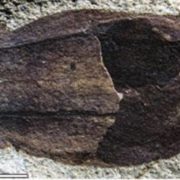
Early origins of diversification in the Solanaceae family ($)
Plant Science Research Weekly, ResearchThe Solanaceae family is, nowadays, one of the most valuable for humankind as it contains several economically important crops as potato, tobacco, tomatoes, etc. However, fossil records that help as understand how and where this family has evolved are elusive. In this paper, Wilf et al. walk us through…

Edge effects enhance vulnerability to climate change in temperate forests
Plant Science Research Weekly, ResearchMuch of the data used to predict forest responses to climate change comes from unfragmented forests, but much of the world’s forests are highly fragmented. Reinmann and Hutyra examined edge effects in a temperate forest in New England, and observed both an increase in biomass with proximity to the…

Ancient human disturbances may be skewing our understanding of Amazonian forests ($)
Plant Science Research Weekly, ResearchThe Amazonian forest is an enormous and crucial ecosystem that encompasses a huge proportion of Earth’s biodiversity and stored carbon. By overlaying maps showing forest inventory plots and sites of ancient human impact, McMichael et al. observe that the inventoried plots from which we draw conclusions…