


Paint the tobacco red: Anthocyanin production in tobacco cells lines
Plant Science Research WeeklyAnthocyanins are common plant pigments that provide dietary benefits, causing an increase in their use as a food coloring agents. However, purifying anthocyanins from current plant sources (such as waste grape skins, red cabbage and berries) is expensive and creates a variable product. Modifying biosynthetic…
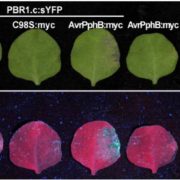
Convergent evolution of effector protease recognition by Arabidopsis and barley (bioRxiv)
Plant Science Research WeeklyPathogenic bacteria Pseudomonas syringae produce an effector protein, AvrPphB. The indirect interaction between this bacterial effector and the Arabidopsis resistance (R) protein RPS5 has been characterized previously; AvrPphB is a cysteine protease that targets another plant protein, PBS1, causing it…
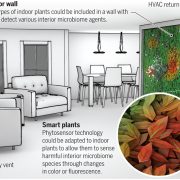
Phytosensors at home ($) (Science)
Plant Science Research WeeklyIn this review Stewart et al. address the potential use of houseplants as biosensors for harmful agents in the home environment, taking advantage of phytosensor technology already in use in agricultural settings. The authors propose the design of genetically modified plants that carry a synthetic promoter…
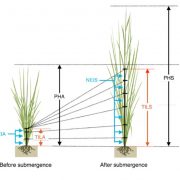
Ethylene-gibberellin signaling underlies adaptation of rice to periodic flooding ($) (Science)
Plant Science Research WeeklyThe diverse responses of rice to flooding are really interesting. Many varieties die, some survive by essentially becoming metabolically quiescent to conserve their energy (which involves the Sub1 pathway), and some, called deepwater rice, respond through rapid elongation that elevates their leaves above…

Reconstituting Arabidopsis CRY2 signaling pathway in mammalian cells reveals regulation of transcription by direct binding of CRY2 to DNA (Cell Rep)
Plant Science Research WeeklyCryptochromes (CRYs) are blue-light receptors that were first identified in plants more than 20 years ago, but with modes of action that have remained obscure. Yang, Mo, and Yu, et al. reassembled this blue-light signaling module in mammalian cells in order to better understand CRY function. Previously,…

A comprehensive toolkit for inducible, cell type-specific gene expression in Arabidopsis (Plant Physiol)
Plant Science Research WeeklyGene knock-outs and overexpression studies are useful indicators of gene function, but can obscure the gene’s distinct cell-type specific functions. Schürholz and Lopez-Salmeron et al. have developed a set of constructs that allow for precise expression of a gene-of-interest in subsets of cells, accompanied…
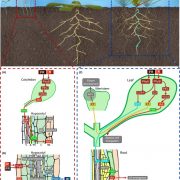
Opinion. Location matters: Canopy light responses over spatial scales ($) (Trends Plant Sci)
Plant Science Research WeeklyLight is arguably one of the most important signals recognized by plants. Not surprisingly, plants exhibit a wide range of light responses, ranging from cell-specific to large-scale. Küpers et al. review these responses, with an emphasis on their spatial scales. For example, the production of extrafloral…
When Lipids Meet Hormones: Plants’ Answer to Complex Stresses
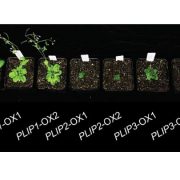
Research, The Plant Cell, The Plant Cell: In a NutshellWang et al. show that abscisic acid-inducible genes encode lipid degrading enzymes that release polyunsaturated fatty acids from chloroplast lipids as precursors for jasmonic acid production leading to biotic defenses in Arabidopsis. Plant Cell doi.org/10.1105/tpc.18.00250
By Kun Wang and Igor Houwat
Background:…
A Malate-GABA Transporter and the Role of GABA in Plant Cells
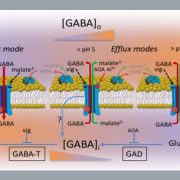
Research, The Plant Cell, The Plant Cell: In a NutshellRamesh et al. discover a malate-GABA transporter that may play a role in signaling envioronmental condtions and metabolic status in plant cells. Plant Cell https://doi.org/10.1105/tpc.17.00864
Background: Gamma-aminobutyric acid (GABA) is a signaling molecule in mammalian nervous systems where it…