


Review: More than a pinch of salt: How plants tolerate salty conditions (Annu. Rev. Plant Biol.)
Plant Science Research WeeklyHigh soil salinity has implications greater than what meets the eye; in addition to the apparent ‘ionic’ stress caused by the toxic sodium (Na+) and chloride (Cl-) ions, it causes osmotic stress (drought-like condition), altered potassium (K+) homeostasis, inhibition of photosynthesis and a plethora…

Meltome atlas: revealing protein thermal stability across the tree of life (Nature Methods)
Plant Science Research WeeklyEnvironmental cues can affect the structure and function of proteins. To get broad empirical information about the effect of temperature on protein stability, Jarzab, Kurzawa, Hopf et al. generated an atlas of proteome thermal stability across 13 model organisms, including bacteria, yeast, worm, fish,…

AthCNV: A map of DNA copy number variations in the Arabidopsis thaliana genome (Plant Cell)
Plant Science Research WeeklyIntraspecific phenotypic variability can be attributed to differences at the genome level such as copy number variations (CNVs). CNVs are large DNA fragments which differ in number between individuals and likely have a crucial evolutionary role. Due to the 1001 Genomes Project, over 1,000 Arabidopsis…

Evolution of tetraploid meiosis (PNAS)
Plant Science Research WeeklyGenome duplications are common in plants and thought to be an important contributor to evolutionary innovations, but the increase in ploidy that results from a genome duplication also presents challenges for reproduction. Because there are four sets of homologous chromosomes in the derived tetraploid…

A regulatory module for survival on low potassium (Nature Plants)
Plant Science Research WeeklyPotassium ions (K+) play a variety of important roles in plant physiology and are maintained at a high concentration in the cytosol relative to the available K+ in the environment. Potassium may accumulate to an even higher concentration in the vacuole, where it helps to regulate turgor pressure. During…

Maize aquaporin PIP2;5 alters water relations and plant growth (Plant Physiol)
Plant Science Research WeeklyAquaporins, also known as water channels, are conserved across all kingdoms. In plants, the plasma membrane intrinsic protein (PIP) subfamily controls membrane water permeability. Maize aquaporin PIP2;5 is highly expressed in roots. By reverse genetic approaches, Ding et al. showed that overexpression…
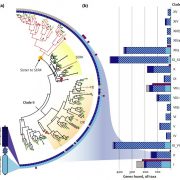
Structural evolution drives diversification of the large LRR-RLK gene family (New Phytol)
Plant Science Research WeeklyLeucine-rich repeat receptor-like kinases (LRR-RLKs) act as signaling receptors, are the largest plant-specific protein kinase family, and are involved in myriad developmental activities and defense systems. Due to the large number of proteins in this group, their diversification and consequent redundancy…
Mystery of adventitious root formation in grapevine (Plant Physiol)
Plant Science Research WeeklyGrapevines (Vitis vinifera L.) are clonally propagated by stem cuttings, which depends on the formation of adventitious (stem-borne) roots. In this paper Chen at al., showed the function of microRNA encoded peptides (miPEPs) in adventitious root formation of cultured grape plantlets. MicroRNA biogenesis…
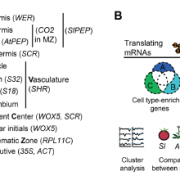
Innovation, conservation, and repurposing of gene function in plant root cell type development (bioRxiv)
Plant Science Research WeeklyRoots have many specialized cells arranged in concentric circles that are functionally homologous among various plant species but with varying cell-type-specific developmental programs. To further understand these developmental programs, Kajala et al. performed TRAPseq (Translating Ribosome Affinity…