


Review: Integration of reactive oxygen species and hormone signaling during abiotic stress (Plant J.)
Plant Science Research Weekly
During its life cycle, a plant experiences many types of abiotic stress including drought. While waiting for the next drops of water, a thirsty plant acclimates by initiating a series of tolerance responses. Stress perception is followed by stress-induced signaling which can include reactive oxygen…
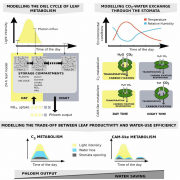
Alternative CAM and water-saving flux modes into C3 leaf metabolic model (Plant Cell)
Plant Science Research WeeklyCrassulacean acid metabolism (CAM) is a photosynthetic adaptation pathway in arid environments to minimize water loss by opening the stomata at night, when the temperature and therefore water loss due to transpiration is lower. Carbon dioxide is initially fixed at night and stored in the vacuole. Engineering…

Nitrate inhibits nodule organogenesis through inhibition of cytokinin biosynthesis in Lotus japonicus (bioRxiv)
Plant Science Research WeeklyThe symbiotic association between legumes and nitrogen-fixing rhizobia leads to the formation of nodules in roots, which supply nitrogen to the plant in low soil nitrate condition. In contrast, the presence of high nitrate reduces nodule formation. Cytokinin (CK) biosynthesis plays a major role in nodule…
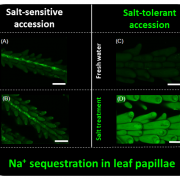
The halophyte seashore paspalum uses adaxial leaf papillae for sodium sequestration (Plant Physiol.)
Plant Science Research WeeklyGlobal warming and intensive farming are increasing soil salinity, which is predicted to affect 30% of cultivated land by 2050. Salinity represents a major threat for agriculture as most crops drastically reduce their growth and productivity in saline environments. Understanding the strategies used by…
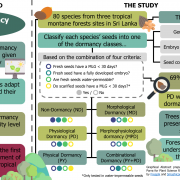
The first dormancy profile for a tropical montane forest community (Plant Biol.) ($)
Plant Science Research Weekly
Seed dormancy is a crucial mechanism to synchronize germination with the most suitable environmental conditions. Therefore, assessing its prevalence at the community level allows us to understand how plants adapt to their local environment. In this paper, Athugala and colleagues build the first dormancy…
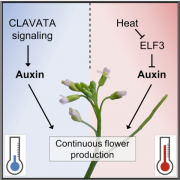
CLAVATA signaling ensures reproductive development in plants across thermal environments (Curr. Biol.)
Plant Science Research WeeklyPlant reproduction and development requires robust signaling pathways that integrate environmental queues such as temperature. In Arabidopsis, the formation of flower primordia from the inflorescence meristem (IM) depends on the proliferation/ differentiation balance and is regulated by auxin and the…
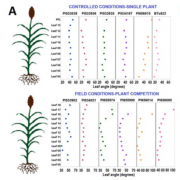
Leaf angle control across the sorghum canopy (Plant Physiol.)
Plant Science Research WeeklyIn a rosette-forming plant like Arabidopsis, leaf radial angle is optimized to prevent self-shielding. By contrast, in a plant such as sorghum, leaf vertical angle affects self-shading. A “smart canopy” model has been proposed in which upper leaves have a more upright orientation to allow more light…
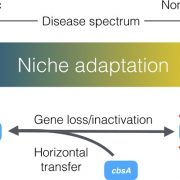
Repeated gain and loss of a single gene modulates the evolution of vascular plant pathogen lifestyles (Science Advances)
Plant Science Research Weekly
Within the bacterial genus Xanthomonas there are many plant pathogens, some of which colonize living cells within leaves, and others of which are vascular pathogens that colonize and spread through vascular tissues. Gluck-Thaler et al. looked at genomes from sets of closely related bacteria that…

The rise of angiosperms pushed conifers to decline during global cooling (Proc. Natl. Acad. Sci. USA)
Plant Science Research Weekly
During the Triassic and Jurassic periods (approximately 250 – 140 million years ago), Earth was dominated by gymnosperms including conifers. Today, the number of species and individuals is greatly reduced from their heyday, and instead Earth is dominated by angiosperms. Although it is widely stated…