

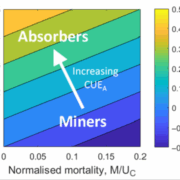
Viewpoint: A new lens on ectomycorrhizal function: exploring the absorber-miner spectrum
Plant Science Research WeeklyMycorrhizal symbiosis is widespread in nature, occurring in approximately 90% of terrestrial plant species, and played a crucial role in enabling plant colonization of land over 450 million years ago. The majority (>80%) of these associations are formed by endomycorrhizae, in which fungi from the…
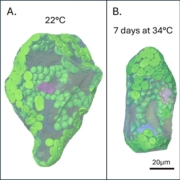
Sweet heat: Organelle-specific carbohydrate metabolism in heat stress
Plant Science Research WeeklyPlant metabolism varies substantially between developmental stages, cell types, and intracellular environments. Similarly, biochemical responses to abiotic stress often deviate between neighboring cell types, but discerning what is changing where becomes more challenging in smaller and more fragile sub-compartments. …
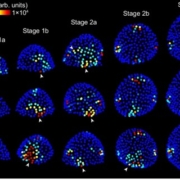
Stochastic gene expression, an ordinary part of multicellular life
Plant Science Research WeeklyStochasticity is an important feature of genes, allowing for variability in their abundance and activity prior to ‘fine-tuning’ at later periods of development. Kong et al. describe this feature in auxin responsive genes, attributing their ‘stochastic’- or inherently random expression – as…
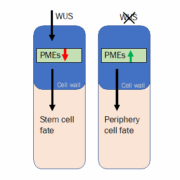
The cell wall controls stem cell fate
Plant Science Research WeeklyPlants are immobile and their cells are contained within cell walls, yet they demonstrate vast post-embryonic developmental plasticity. Evidence shows that the fate of the cell is likely determined by its location within the plant, but the specific mechanisms and pathways involved are currently unknown.…
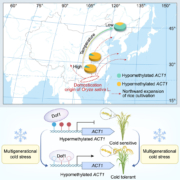
Transgenerational epigenetic cold tolerance in rice
Plant Science Research WeeklyAs rice has expanded northwards from its center of origin, it has been exposed to deeper and longer periods of cold. Male fertility is particularly sensitive to cold. Song et al. designed a clever strategy to study mechanisms of cold tolerance. They subjected meiotic-stage cold-sensitive rice varieties…
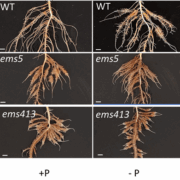
Bidirectional root-shoot signaling via CCR1 regulates cluster root and nodule development in legumes
Plant Science Research WeeklyLegume plants are renowned for their ability to form symbiotic relationships with nitrogen-fixing bacteria (rhizobia) in specialized root tissues called nodules. This symbiosis enables the conversion of atmospheric nitrogen into ammonia, a form of nitrogen that plants can readily use for growth. This…
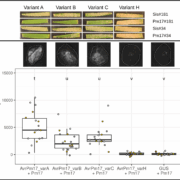
Molecular epidemiology of European wheat powdery mildew
Plant Science Research WeeklyAt the height of the Covid pandemic, epidemiologists carried out mass sequencing of the circulating virus populations to track their movements and the emergence of new variants. Such molecular epidemiological studies are rarer for plant pathogens but can be equally effective in learning about their patterns…
Plant Science Research Weekly: June 6, 2025
WWR Full PostReview: Gene discovery, from Arabidopsis to crops
This year marks the 25th anniversary of the publication of the first genome sequence of a plant, Arabidopsis thaliana, (see https://doi.org/10.1038/35048692). As this review by Bevan et al. observes, this exciting accomplishment was met with some skepticism…
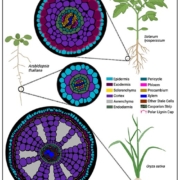
Review: Lost in translation – lessons from concepts that don’t translate from Arabidopsis
Plant Science Research WeeklyThe May 2025 issue of The Plant Cell has a focus on Arabidopsis and how this simple model plant has had an outsized impact on our understanding of pretty much everything botanical (and beyond). Alongside several articles highlighting this impact, this review by Roeder et al. features eight short vignettes…