

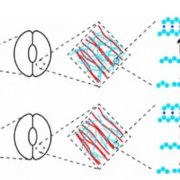
Pectinase function in growth and stomatal dynamics
Blog, Plant Science Research Weekly, Research, Research BlogPectin is a polymer that holds cell walls together and stiffens the walls, but what happens when those cell walls need to move, for example when cells (including guard cells) expand? Rui et al. started with a guard-cell specific transcriptome to identify genes encoding cell-wall modifying enzymes. They…

Ectopic expression of WINDING 1 leads to asymmetrical distribution of auxin and a spiral phenotype in rice
Blog, Plant Science Research Weekly, Research, Research BlogThrough insertional mutagenesis of rice, Cheng et al. identified a BTBN (Brac/Tramtrack/Broad complex and NPH3 domain)-encoding gene which they named WINDING 1 (WIN1), because the mutant phenotype (caused by ectopic expression in the shoot) causes the shoot to grow in a spiral. Ectopic expression of…
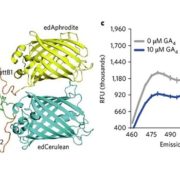
In vivo gibberellin gradients visualized in rapidly elongating tissues
Blog, Plant Science Research Weekly, Research, Research BlogBiosensors can reveal cellular or even sub-cellular distributions of hormones, greatly enhancing our understanding of hormone action. Rizza et al. have developed an in vivo, FRET-based gibberellin biosensor, GIBBERELLIN PERCEPTION SENSOR 1 (GPS1), that incorporates portions of two GA-binding proteins,…

Temporal network analysis of mild drought in Brassica rapa
Blog, Plant Science Research Weekly, Research, Research BlogIf you whithold water from a plant it eventually will wilt, but before this visible change there are other measurable effects and responses. However, many plant processes change cyclically over a 24-hour period independently of early drought responses, so it can be difficult to separate drought-responsive…

Phosphorus nutrition and root-associated fungal microbiota of nonmycorrhizal Arabis alpina
Blog, Plant Science Research Weekly, Research, Research BlogAssociations with mycorrhizal fungi greatly enhance phosphorus (P) uptake for most plants, but the Brassicaceae are nonmycorrhizal due to the loss of essential symbiosis genes. Almario et al. investigated the fungal microbiota of Arabis alpina, a Brassicaceae species that grows in very-low P soils. The…
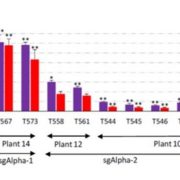
Low-gluten, non-transgenic wheat engineered with CRISPR/Cas9
Blog, Plant Science Research Weekly, Research, Research BlogCeliac disease is a debilitating autoimmune disease in which antigens in plant gliadins (one type of gluten protein) stimulate production of antibodies that inflame the lining of the small intestine. In wheat, α-gliadin (the main cause of the sensitivity) is encoded by more than 100 genes, thwarting…

Peanuts that keep aflatoxin at bay: A threshold that matters
Blog, Plant Science Research Weekly, Research, Research BlogAflatoxins are small molecules that are extremely damaging to human health that are produced by the fungal species Aspergillus flavus and Aspergillus parasiticus. Peanut pods form underground and so are particularly vulnerable to infection by the fungus. Sharma et al. used a two-pronged approach to…

What we're reading: October 13th
BlogUpdate: Peroxisome function, biogenesis, and dynamics in plants
Peroxisomes are endoplasmic reticulum-derived membrane-enclosed organelles in which many oxidative enzymatic reactions are compartmentalized. These reactions and their products contribute to energy production, detoxification, and signaling.…
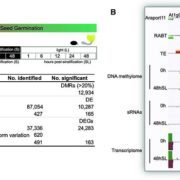
Genomic and epigenomic events occurring during germination
Blog, Plant Science Research Weekly, Research, Research BlogSeeds integrate environmental information and trigger molecular pathways that help with the decision making process of whether to germinate or not. Several studies in numerous species have shown details of global transcriptomic changes during germination. However, Narsai et al. dig a little deeper. By…