


Scientists, put down your pipettes and get involved with ASPB!
Blog0 Comments
/
Guest post by Lucas Vanhaelewyn, PhD candidate, Laboratory of Functional Plant Biology, Ghent University
Being a scientist is a wonderful job, especially when your theory is suddenly confirmed on a gel, or when that fluorescent signal does get upregulated. Those moments highly compensate for those…
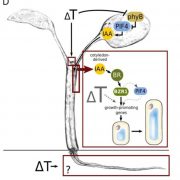
Plant Science Research Weekly: May 10th
Blog, WWR Full PostDurum wheat genome highlights past domestication signatures and future improvement targets
Durum wheat cultivar Svevo (Triticum turgidum L. ssp. durum) is a cereal crop predominantly grown for pasta production. It is the result of multiple rounds of domestication, originally deriving from wild emmer…

View From the Trenches - Advice if your PhD Advisor Unexpectedly Dies
BlogWritten by Laura Klasek
Two weeks before my qualifying exam, my PhD advisor — Kentaro Inoue — and I met to discuss the thirty-first draft of my dissertation research proposal and encountered a sticking point on the second of three aims. I rewrote, and reworked, and rewrote the section throughout…

Test Tube Seed Necklace - Easy Wearable Outreach
BlogA guest post by Drake Gardner
Test Tube Seed Necklace! ?? Great outreach activity. Fun seeds to use are broccoli ? or purple mustard seed ?
Have the...
Posted by Exploring Plants on Thursday, May 9, 2019

Sequencing Plant Transcriptomes at Single-Cell Resolution Allows Unprecedented Characterization of Genetic and Developmental Cellular Processes
Blog, Plant Physiology: News and Views, ResearchJose M Celedon 1
1 Michael Smith Laboratories, The University of British Columbia, 2185 East Mall, Vancouver, BC V6T 1Z4, Canada.
Transcriptomic studies in plants usually involve anonymous survey-style methods, where whole organs or tissues are homogenized, and each cell’s contribution to transcript…
Maximizing the signal, decreasing the noise, Part 2: Skills for speaking and designing clearly
Blog, Plantae Webinars, Science Communication, WebinarsMaximizing the signal, decreasing the noise, Part 2: Skills for speaking and designing clearly
Recorded April 2019
About This Webinar
In part 1 of the webinar, Professor Tobias Baskin introduced a philosophy for writing clearly based on recognizing that our words are read. In part 2, he extends…

Chemical convergence between plants and insects: biosynthetic origins and functions of common secondary metabolites
Blog
Plants and insects aren't closely related, but the have indeed a plethora of similar chemical weapons used for their interactions (defense, attraction, etc). In this article Beran, et al, shows the different metabolites that are shared in both groups, in insects and plants. 1.The monoterpenes…

Preparing your research story for peer review and publication
Blog, Plantae Webinars, Science Communication, WebinarsPreparing your research story for peer review and publication
Recorded Mary 2019
About this Webinar
Considering how important writing is to a career in science, many scientists receive little formal training in the writing process. In this seminar, Mary shares tips to help overcome common…
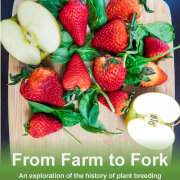
From Farm to Fork: An exploration of the history of plant breeding through cooking
BlogCreated by Mishi Vachev as part of the ASPB Conviron Scholars Program
From Farm to Fork