


Review. Great moments in evolution: the conquest of land by plants ($) (Curr Opin Plant Biol)
Plant Science Research WeeklyPlant occupation of land was a crucial step in evolution, without which life as we know it today would not exist. Stefan Rensing takes us on an evolutionary journey, discussing the advent of photosynthesis in cyanobacteria and eukaryotic algae, which led to atmospheric oxygen, to plant terrestrialization,…
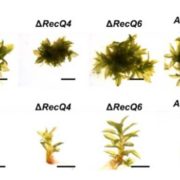
Role of RecQ helicases in DNA repair and gene targeting in moss (Plant Cell)
Plant Science Research WeeklyDNA repair is of course a crucial process, and many DNA repair enzymes are conserved across all domains of life. In humans, deficiency in the RecQ family of DNA helicase repair enzymes leads to premature aging and a predisposition to cancer. Previous studies have identified the RecQ family in Arabidopsis…

Letters: Auxin and vesicle traffic (Plant Physiol)
Plant Science Research WeeklyThree letters to Plant Physiology address the role of vesicles in auxin transport, discussing the evidence and conclusions from a recently published paper from three perspectives. Does auxin accumulate in endocytic vesicles? If so, how, and why? The Letters address both the methods used and the intrepetation…

Perspective: Farming with crops and rocks to address global climate, food and soil security (Nature Plants)
Plant Science Research WeeklyRising atmospheric CO2 levels are causing wide-ranging climate abnormalities. Beerling et al. discuss ways to capture CO2 in soils through augmenting soils with crushed basalt, or silicate-rich wastes such as sugarcane mill ash. As the added rock weathers, it reacts with gaseous CO2 to release cations…
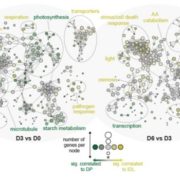
Darkened leaves use different metabolic strategies for senescence and survival (Plant Physiol.)
Plant Science Research WeeklyPut a plant into full darkness and it will gradually senesce, whereas as individually darkened leaf (IDL) will undergo radid senescence. Law et al. used transcriptomic and metabolomic methods to identify the metabolic responses of plants to these two conditions. In fully darkened plants, metabolism is…
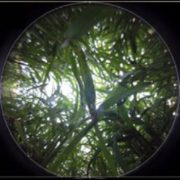
Lights, Camera, Action! Detecting crop biomass traits with low-cost photography (Plant Direct)
Plant Science Research WeeklyMaximizing and improving biomass productivity is essential for grower profitability, to protect natural resources, and to meet global population needs. Unfortunately, assessing biomass usually requires destructive sampling which delays the process for breeding high biomass germplasm. Remote sensing is…

Review: Relative symbiont input and the lichen symbiotic outcome ($) (Curr Opin Plant Biol)
Plant Science Research WeeklyLichen are quite special, as they don’t exist independently of their partnership. Lichen are composed of a fungal partner and a photosynthetic partner (the algal or cyanobacterial photobiont), and these partnerships have evolved independently many times. Spribille provides an overview of some of…
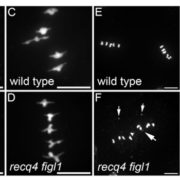
Unleashing meiotic crossovers in hybrid plants ($) (PNAS)
Plant Science Research WeeklyTo generate new plant varieties with desirable traits, plant geneticists cross existing varieties that contain the characters they want to combine. The genetic variability is obtained thanks to events called crossovers, in which segments of homologous chromosomes are swapped during meiosis. The frequency…

Role of a Medicago truncatula citrate transporter in symbiotic nitrogen fixation (Plant Physiol.)
Plant Science Research WeeklyIron, an essential nutrient for plants and symbiotic nitrogen-fixing bacteria, needs to be complexed with organic chelators (i.e. citrate) for in planta transport. Kryvoruchko and colleagues have identified a nodule-specific citrate transporter of Medicago truncatula, MtMATE67 (Medicago truncatula Multidrug…